
Garage Door Stuck Halfway In San Diego, CA?
A Garage Door That Stops In The Middle Usually Indicates Something Inside The System Has Changed
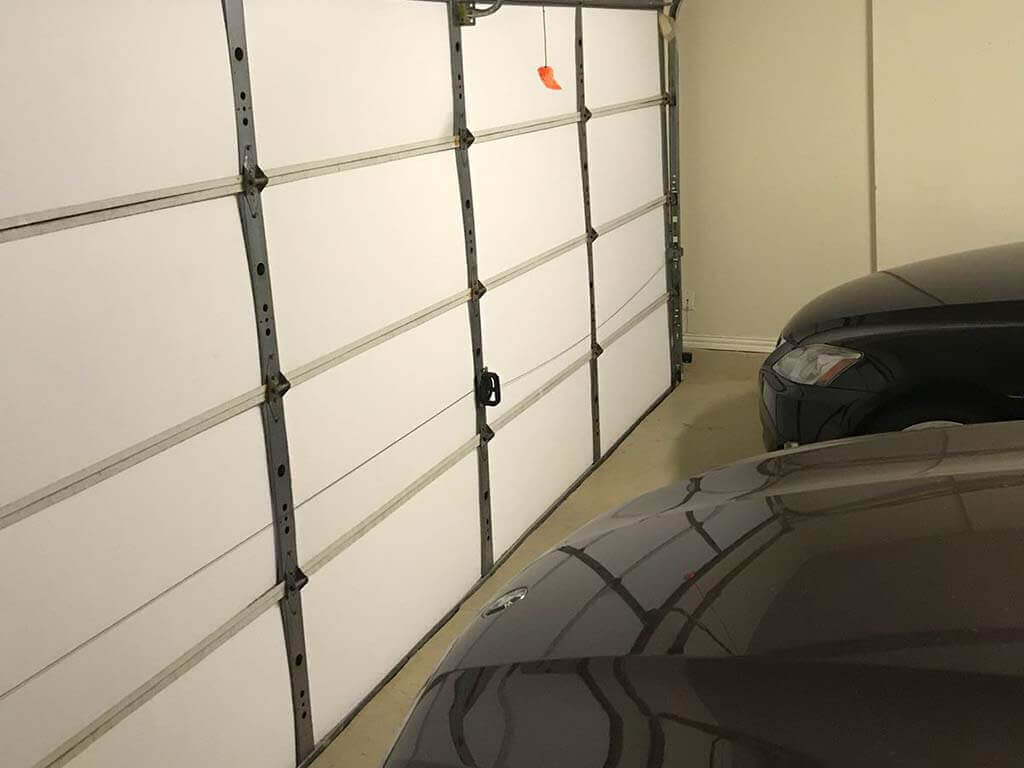
A garage door is designed to complete a full opening or closing cycle.
When the door stops halfway and refuses to continue moving, the system is responding to a condition that prevents normal operation.
Some homeowners discover the problem while leaving for work. Others return home and find the garage door suspended halfway open. In some situations, the door moves a few feet before stopping every time it operates. In others, the issue appears unexpectedly after months or years of normal performance.
Angel Garage Door Inc diagnoses garage doors stuck halfway throughout San Diego County, including Scripps Ranch, Poway, Rancho Bernardo, Mira Mesa, Carmel Valley, Del Mar, Carlsbad, Escondido, Chula Vista, and surrounding communities.
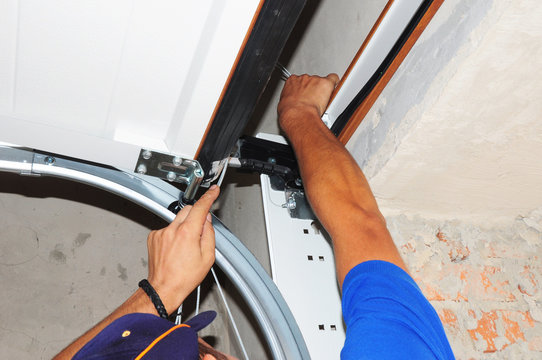
Determining why the door stopped requires inspection of the entire system rather than focusing on a single component.
Springs Often Play A Major Role
Garage door springs carry much of the weight of the door.
When a spring becomes damaged or breaks, the balance of the entire system changes.
The opener may begin lifting the door but eventually encounter more weight than it can comfortably manage. The result is a garage door that stops midway through operation.
Homeowners frequently report hearing a loud bang before the problem appears.
Others simply notice that the garage door feels heavier than it did previously.
A damaged spring is often one of the first components technicians inspect when a garage door becomes stuck halfway.
Cable Problems Can Interrupt Movement
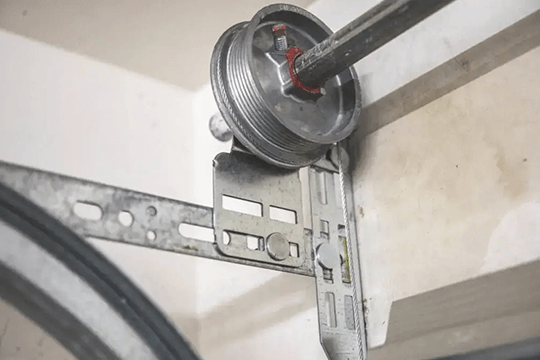
Garage door cables work alongside the spring system to lift and stabilize the door.
When a cable becomes loose, frayed, or detached, the door may no longer travel evenly.
One side of the garage door may continue moving while the other side begins falling behind.
This uneven movement can cause the door to stop partway through operation.
In some situations, homeowners notice the garage door appearing crooked while suspended in the opening.
Track Resistance Can Stop The Door Mid-Cycle
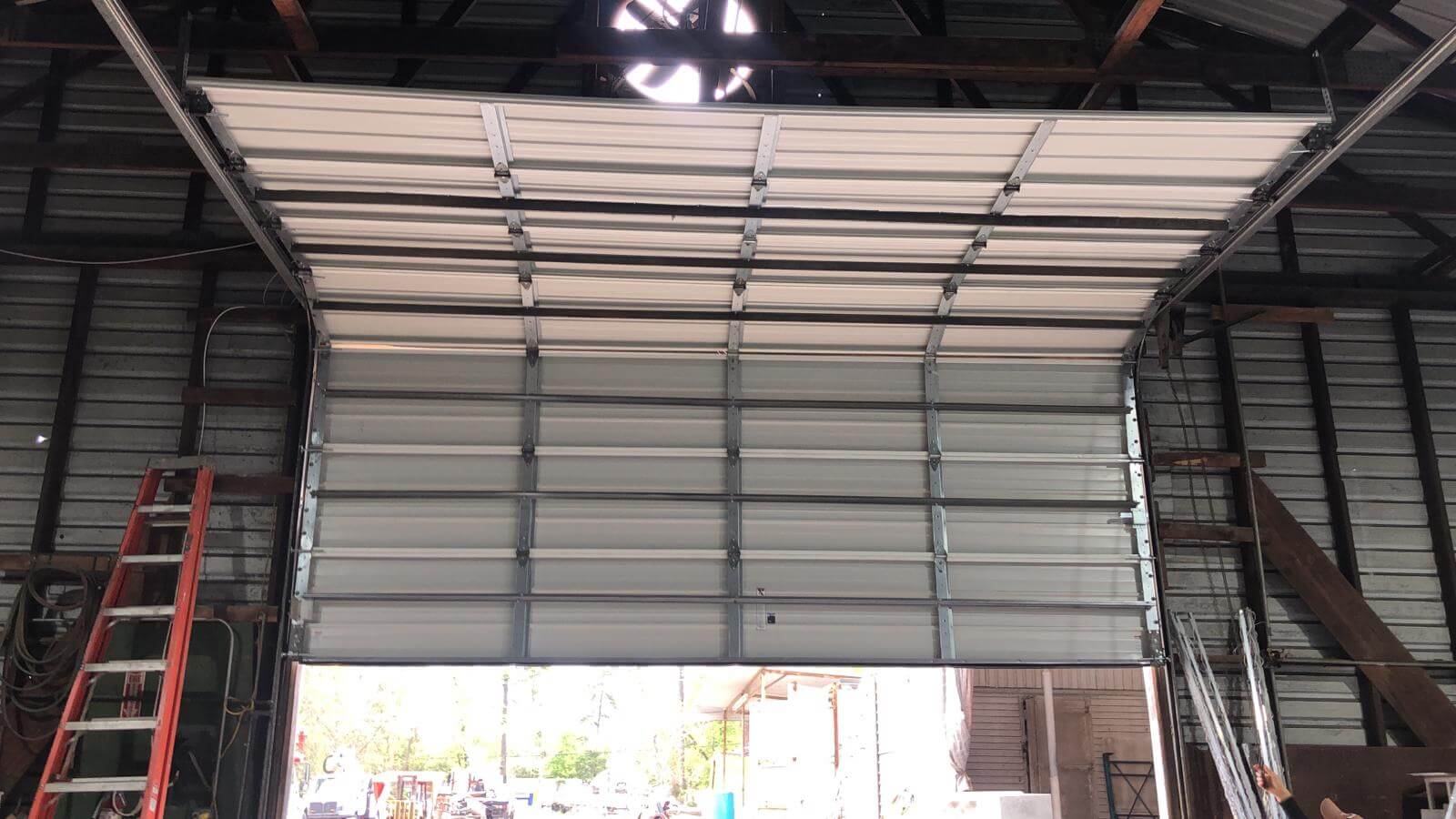
Garage doors depend on smooth movement through the track system.
When tracks become damaged, bent, or misaligned, rollers may encounter resistance during operation.
The opener senses that something is wrong and stops moving the door.
Homeowners often notice additional symptoms before the garage door becomes stuck.
These may include:
- Scraping sounds
- Shaking
- Uneven movement
- Vibration
- Jerking during operation
Track-related resistance can gradually increase until the garage door can no longer complete a full cycle.
Need Help Regarding Garage Door In San Diego, CA?
Why The Opener May Stop Working Midway
Homeowners often assume the opener has failed because it is the most visible part of the system.
Sometimes that assumption is correct.
Other times the opener is simply reacting to conditions elsewhere in the garage door assembly.
The opener continuously monitors:
- Resistance
- Travel limits
- Safety systems
- Operating force
When those conditions fall outside normal ranges, the opener may stop operation before the cycle completes.
A complete inspection helps determine if the opener is the cause or if it is reacting to another issue.
A Door That Stops In The Same Spot Every Time
When the garage door stops at exactly the same location during every cycle, technicians often look for a physical restriction.
Examples include:
- Damaged track sections
- Obstructions
- Roller issues
- Hardware interference
- Alignment concerns
The repeated stopping point provides valuable clues during diagnosis.
A garage door that consistently stops at the same height usually indicates that something at that location is affecting movement.
A Door That Stops In Different Places
A different pattern emerges when the stopping point changes.
One day the door stops three feet from the ground.
The next day it stops halfway open.
Later it may complete an entire cycle without any issues.
This type of behavior often points toward intermittent problems such as:
- Electrical concerns
- Sensor communication issues
- Loose wiring
- Components beginning to wear
These situations can be more challenging because the symptom is not always present during inspection.
Sometimes More Than One Problem Exists
Garage door systems contain many moving parts that work together.
As components age, it is possible for several issues to develop simultaneously.
A worn roller may contribute to track wear.
Track wear may place stress on cables.
Additional strain may affect opener performance.
By the time the garage door becomes stuck halfway, multiple components may already be involved.
This is why technicians inspect the complete system rather than replacing parts based solely on the most obvious symptom.
Frequently Asked Questions
Why is my garage door stuck halfway open?
Can a broken spring cause a garage door to stop midway?
Why does my garage door stop at the same spot every time?
Can opener problems cause a garage door to stop halfway?
Should I keep trying to force the garage door open?
Garage Door Stuck Halfway? Find Out What's Preventing Movement
A garage door that stops halfway often has a problem with springs, cables, tracks, rollers, the opener, or several parts together. Identifying the source starts with understanding how the entire system is operating.
Angel Garage Door Inc provides garage door diagnostics and repair services throughout San Diego County, helping homeowners determine why a garage door becomes stuck halfway and what repairs may be needed to restore normal operation.