
Why Does My Garage Door Reverse Before Closing?
Why Does My Garage Door Reverse Before Closing?
A garage door that starts closing and suddenly reverses before reaching the ground is one of the most common garage door problems homeowners experience.
In many San Diego homes, the issue starts intermittently. The garage works normally most of the time, then suddenly reverses one evening without warning. Over the next few days or weeks, the problem becomes more frequent until the door refuses to close completely at all.
Many homeowners initially assume the opener itself is failing, but garage doors reverse for several different reasons — and the actual issue is often connected to resistance somewhere in the garage system.
Why Garage Doors Reverse Automatically
Modern garage doors are designed with safety systems that stop and reverse the door if the opener senses resistance, obstruction, or unsafe movement during closing.
This prevents the garage door from continuing downward if:
- something blocks the sensors
- the door becomes too heavy
- the tracks create resistance
- or the opener detects abnormal force.
In many cases, the opener is reacting correctly to another mechanical problem developing elsewhere in the garage system.
Misaligned Garage Door Sensors
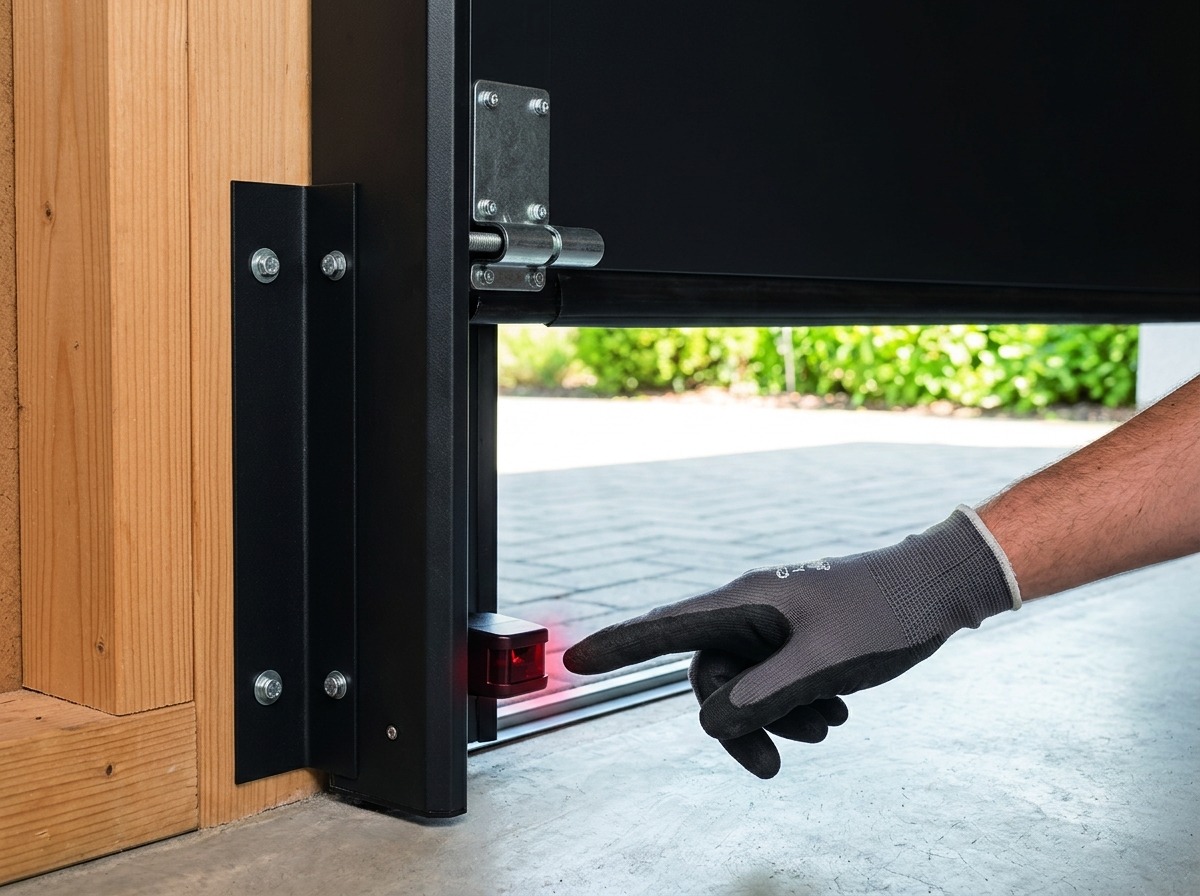
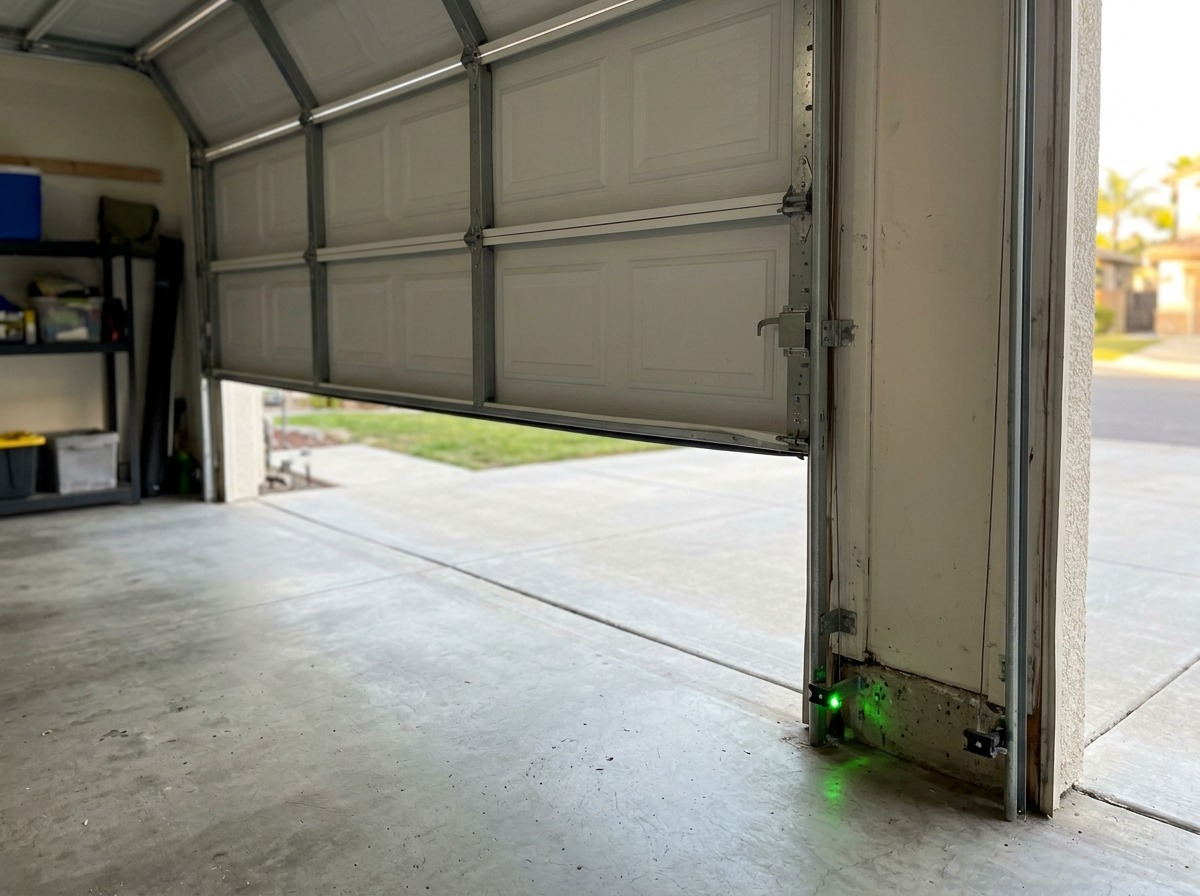
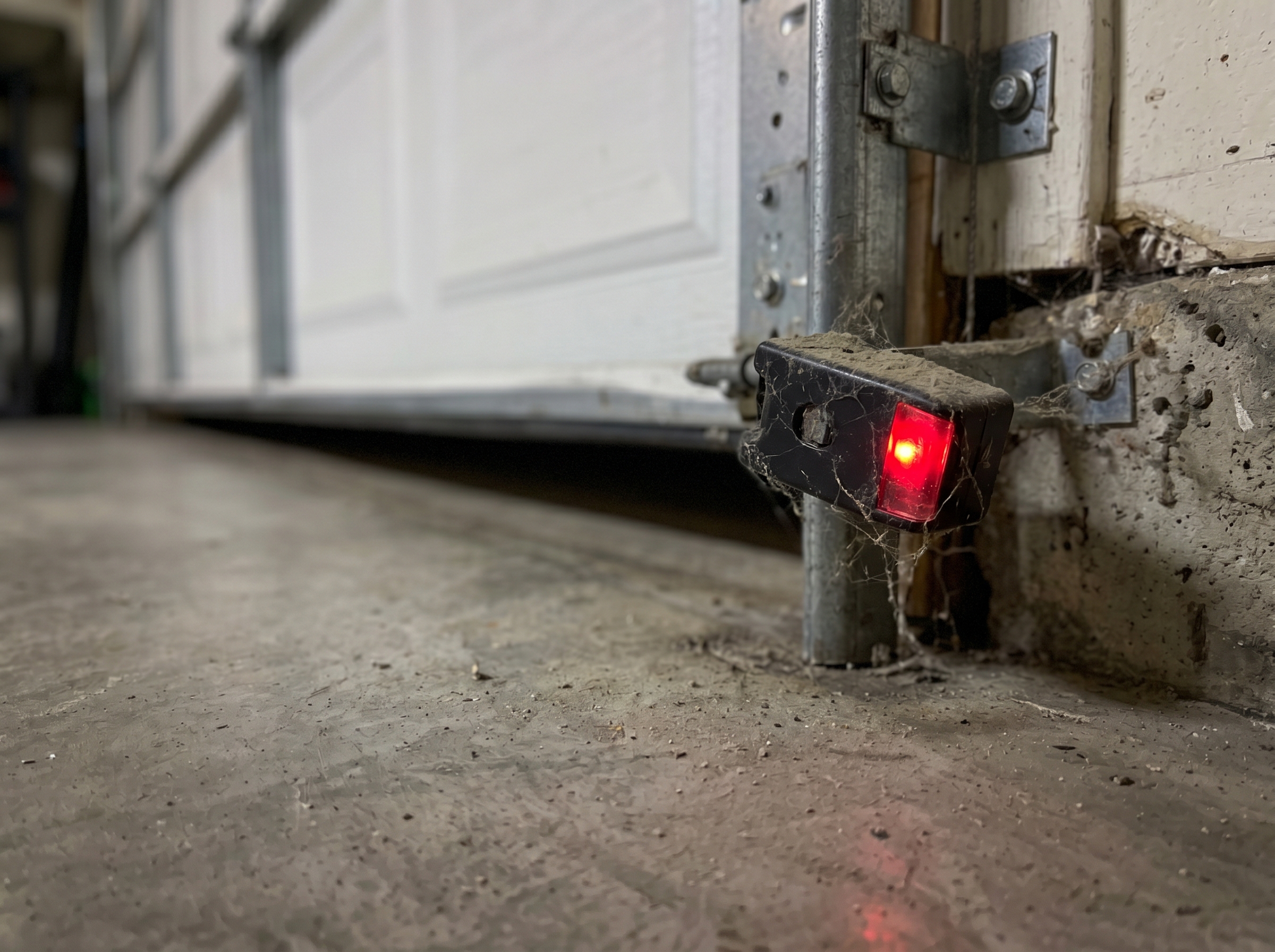
One of the most common causes of reversing garage doors involves the safety sensors near the bottom of the tracks.
These sensors create an invisible beam across the garage opening. If the beam becomes interrupted or misaligned, the opener may stop and reverse automatically.
Homeowners often experience this after:
- bumping the sensors accidentally
- moving storage items near the tracks
- cleaning the garage
- or after gradual vibration loosens the brackets over time.
In some San Diego garages, dust buildup and moisture exposure can also affect sensor visibility and alignment.
Signs of sensor-related problems include:
- blinking opener lights
- the garage reversing immediately
- or the door only closing while holding the wall button continuously.
Garage Door Springs Becoming Weak
Garage door springs carry most of the door’s weight during operation.
As springs weaken over time, the garage door becomes heavier and more difficult for the opener to control properly. Eventually the opener begins detecting excessive resistance and reverses the door as a safety response.
This is especially common in homes where the garage functions as the primary entrance several times per day.
Many homeowners first notice:
- slower opening
- louder operation
- uneven movement
- or the opener straining before the reversing issue starts appearing consistently.
Need Help Regarding Garage Door In San Diego, CA?
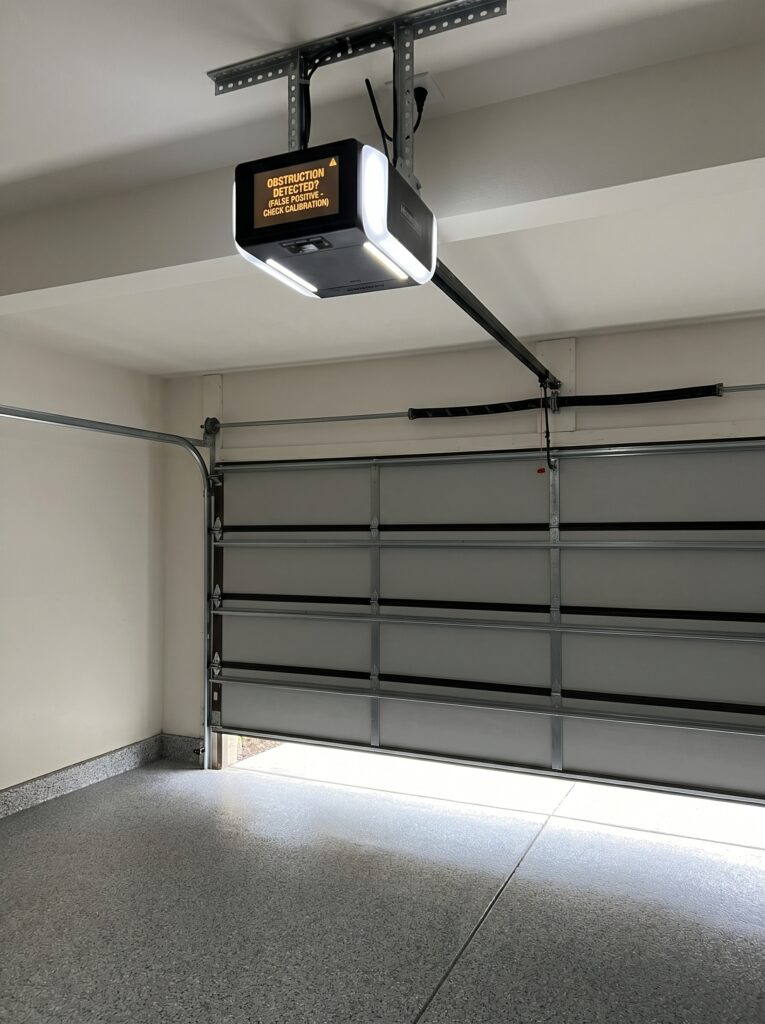
Opener Travel & Force Settings
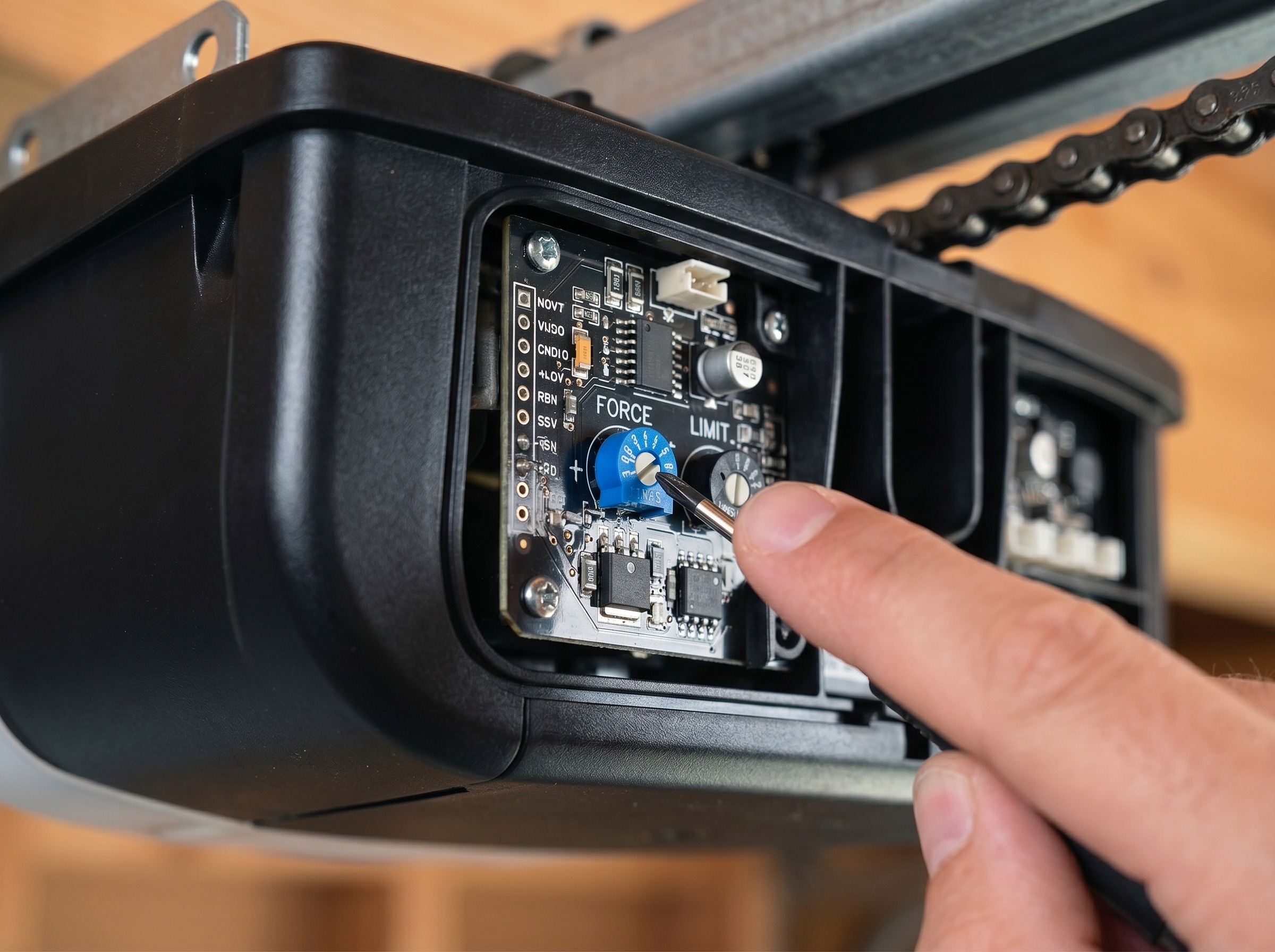
Garage openers use programmed travel and force settings to determine how far the garage door should move and how much resistance is considered safe.
Over time, these settings may drift slightly because of:
- vibration
- hardware wear
- door weight changes
- or mechanical imbalance.
When this happens, the opener may incorrectly believe the garage door hit an obstruction before reaching the ground.
Newer opener systems throughout homes in Carmel Valley, Scripps Ranch, and Rancho Bernardo often use more sensitive electronic calibration systems that react quickly when movement changes even slightly.
Track Resistance & Worn Rollers
Garage doors depend on proper alignment and consistent movement along the track system during each operation. As components age, rollers can become worn, tracks may move slightly out of position, hinges can develop excess play, and overall resistance within the system may increase. When this added strain reaches a certain level, the opener may detect it as a potential blockage and reverse the door before it is able to complete the closing cycle.
This is especially common in:
- older garage systems
- coastal homes exposed to moisture
- and garages with aging hardware that has not been serviced for years.
Homeowners often notice:
- shaking movement
- scraping sounds
- rough operation
- or uneven closing before the reversing problem worsens.
Why The Problem Usually Gets Worse Over Time
Garage door reversing problems rarely fix themselves.
Most homeowners first experience the issue occasionally before it becomes constant.
As springs weaken, rollers wear further, or resistance increases throughout the system, the opener continues detecting more strain during every cycle.
Eventually the garage may:
- stop closing completely
- reverse every time
- shake heavily during movement
- or stop operating altogether.
Addressing the underlying mechanical issue early usually prevents additional strain on the opener system and other garage components.
Garage Door Reversing Problems In San Diego Homes
Different parts of San Diego County experience different garage door conditions.
Homes near the coast often develop:
- roller corrosion
- hinge wear
- and track resistance from moisture exposure.
Homes throughout Poway, Rancho Bernardo, and Scripps Ranch often experience heavier daily garage usage because the garage serves as the primary household entrance.
Older homes throughout La Mesa and central San Diego may still operate with aging springs, original tracks, and older opener systems that have been cycling daily for many years.
Because we regularly repair garage systems throughout San Diego County, our technicians are familiar with the causes of reversing garage doors commonly seen throughout the area.
Frequently Asked Questions
Why does my garage door close then immediately open again?
Can weak garage door springs cause reversing problems?
Why do I have to hold the wall button to close my garage door?
Can worn rollers make my garage door reverse?
Garage Door Reversing Before Closing In San Diego?
Angel Garage Door Inc repairs garage doors with reversing problems, sensor issues, spring imbalance, opener calibration problems, damaged rollers, and garage doors that no longer close properly.